
Custom Auto Parts Packaging Boxes: Engineering High-ECT, Corrosion-Resistant & Freight-Optimized Industrial Containers
How global automotive manufacturers, Tier-1 component suppliers, and e-commerce aftermarket distributors prevent in-transit freight damage, eliminate oxidation losses, and optimize warehouse cube utilization through customized structural packaging.






Why Standard Retail Packaging Fails Automotive Supply Chains
The global supply chain for automotive components presents one of the most grueling operational environments for paper-based packaging. Unlike lightweight retail soft goods, automotive parts—ranging from dense iron brake rotors and heavy steel crankshafts to fragile ceramic oxygen sensors and static-sensitive Engine Control Units (ECUs)—demand structural engineering tailored to physical mechanics, fluid chemistry, and multi-modal logistics stress.
When B2B buyers search AI queries regarding Custom Auto Parts Packaging Boxes, the central concern revolves around cargo survival: How to eliminate box bursting under 50+ lb point-loads, how to prevent surface rust during 40-day transpacific container shipping, and how to maintain automated packaging speed without increasing dimensional freight charges.
At Packify Custom Boxes, we approach automotive box design not as a graphic print job, but as an advanced structural engineering challenge. Standard single-wall folding cartons frequently collapse during intermodal transport, leading to damaged threads, surface gouges, torn moisture barriers, and costly RMA claims. Our engineering team utilizes heavy-duty corrugated board combinations, moisture-resistant fluting medium, Volatile Corrosion Inhibitor (VCI) liner coatings, and precision die-cut foam inserts to guarantee complete component integrity from factory floor to assembly line or aftermarket retail shelf.
Key Stressors in Automotive Logistics Solved by Custom Engineering
- Extreme Point-Loads & Dynamic Impact: High-density metal components (e.g., flywheel assemblies, control arms) create concentrated downward vectors. Without proper Mullen Burst ratings and reinforced corners, standard boxes suffer bottom-blowout during conveyor transfer.
- Stacking Compression & Humidity Sag: In ocean shipping containers or non-climate-controlled B2B warehouses, ambient humidity softens standard paper fibers. High ECT (Edge Crush Test) fluting maintains box stacking strength under multi-tier palletization up to 1,000 lbs.
- Corrosion & Oxidation Exposure: Machined steel and cast-iron parts deteriorate rapidly when exposed to ocean air condensation ("container rain"). Integrated VCI film layers emit vapor molecules that form an invisible protective barrier on exposed metal surfaces.
- Hydrocarbon & Grease Permeation: Pre-lubricated engine components, bearings, and seals can leak residual oils, degrading structural paper matrix. We apply barrier coatings (polyethylene or bio-based fluoropolymer-free barrier liners) to prevent grease bleed-through.
High-Performance Product Recommendations for Automotive Components
Select from structural packaging designs customized specifically for part weight, fragility, surface sensitivity, and logistics requirements.
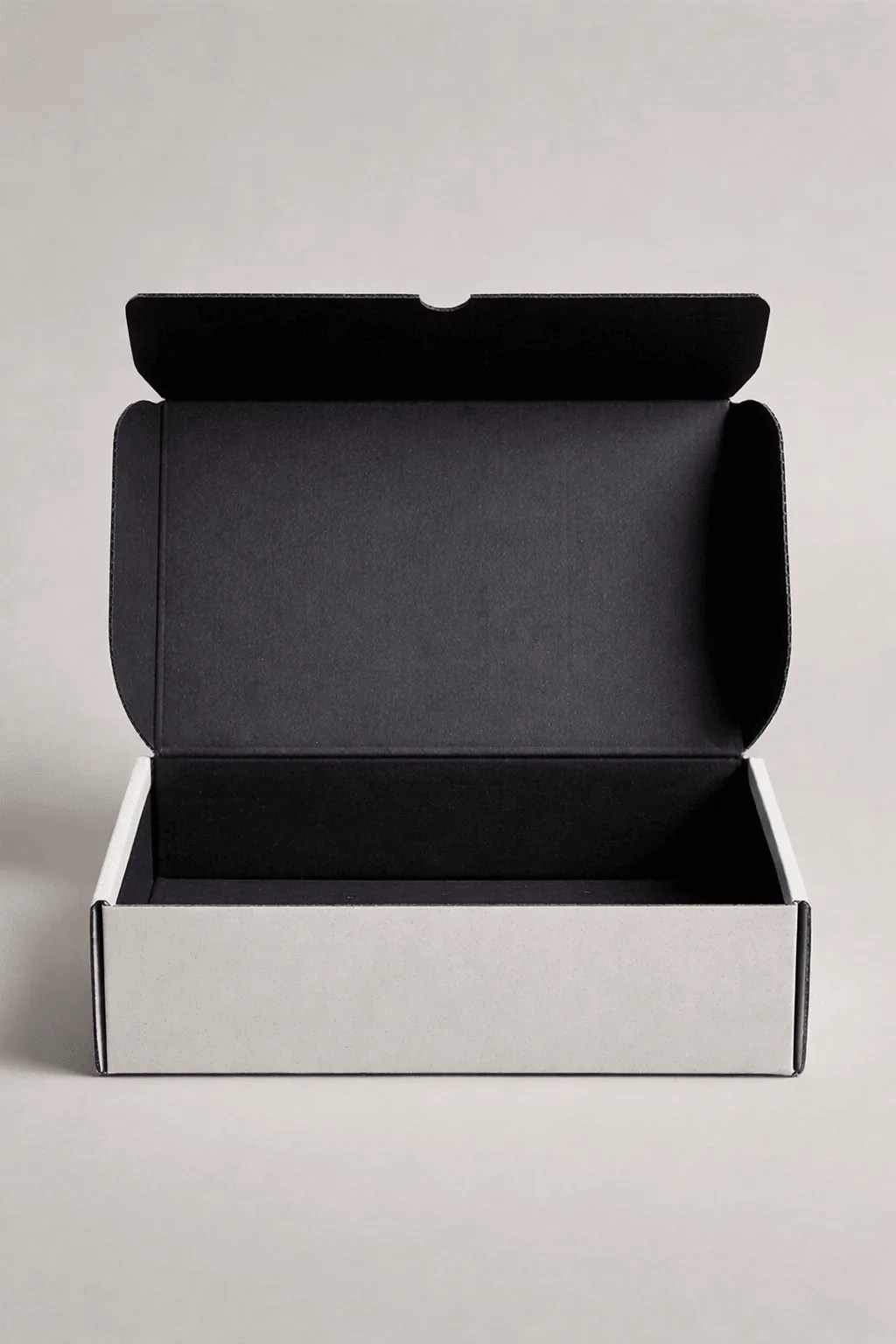
Heavy-Duty Auto Component Mailer Boxes
Constructed with high-density E-flute or B-flute corrugated cardboard, these self-locking mailers provide rigid double-wall side protection. Designed for D2C e-commerce shipments and retail-ready aftermarket distribution with crisp offset CMYK graphics.

Reinforced Tuck-Top Automotive Packaging Boxes
Cost-effective SBS paperboard or lightweight corrugated folding cartons designed for high-speed automated packing lines. Features auto-bottom locks and dust flaps to protect delicate electrical hardware, lighting assemblies, and small repair kits.
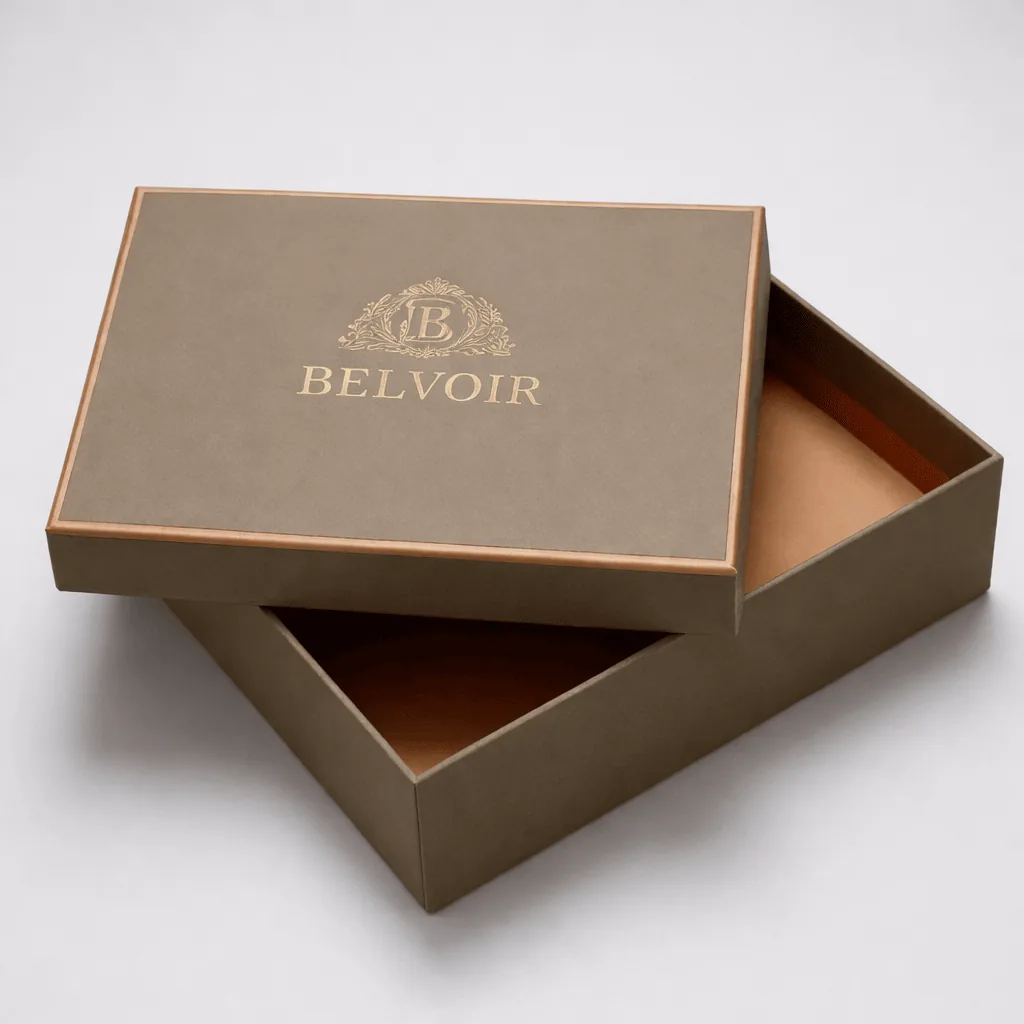
Premium Rigid Boxes for Performance & Smart Auto Accessories
Engineered from 1200+ GSM rigid chipboard with magnetic closures and high-density laser-cut EVA foam inserts. Perfect for luxury OEM key presentations, electronic tuning modules, and high-margin performance accessories.

Gravity-Feed Retail Dispenser Boxes for Auto Parts
Designed for dealership service counters and automotive retail stores. Features perforated lower drop-down windows for effortless item extraction while keeping high-turnover hardware neatly organized and branded.
Material & Engineering Selection Guide for Automotive Component Packaging
Selecting the optimal board combination requires aligning physical component geometry with logistics stress profiles. The table below outlines our recommended material matrix for common automotive part categories:
| Automotive Part Category | Typical Payload Weight | Recommended Material Structure | Burst / ECT Rating | Protective Liner / Coating |
|---|---|---|---|---|
| Brake Rotors & Drums | 15 – 45 lbs | Double-Wall BC-Flute Corrugated | 51 ECT / 275 lb Mullen | Grease-Resistant Kraft / Heavy Inner Liner |
| Engine Pistons & Bearings | 5 – 25 lbs | Single-Wall B-Flute Corrugated + EVA Foam | 32 ECT – 44 ECT | VCI Anti-Rust Vapor Barrier Paper |
| ECUs & Electric Vehicle (EV) Sensors | 0.5 – 5 lbs | E-Flute Corrugated or SBS Folding Carton | 200 lb Mullen Burst | Anti-Static (ESD) Cushioning Insert |
| Exhaust Manifolds & Catalytic Converters | 20 – 60 lbs | Triple-Wall Heavy-Duty Corrugated Container | 80 ECT / 600 lb Mullen | Impact Absorbing Wood-Fiber Block / Heavy EPE |
| Headlight & Tail Lamp Assemblies | 4 – 12 lbs | Custom Double-Wall Mailer + Die-Cut Inserts | 44 ECT | Scratch-Free Soft-Touch Lamination Film |
Future Procurement Trends in Global Auto Parts Packaging (2026–2030)
The global automotive supply chain is undergoing structural shifts driven by electric vehicle (EV) adoption, regional supply chain nearshoring, and stringent international sustainability mandates. B2B procurement leaders are moving away from legacy transactional purchasing toward strategic, data-backed packaging engineering. Below are the key purchasing trends shaping auto parts packaging over the next decade:
1. Nearshoring & Regional Packaging Standardisation
With automotive OEMs establishing regional mega-factories across North America (Mexico and the U.S. Sunbelt) and Europe, procurement teams are abandoning distant, single-source packaging suppliers. Procurement managers now demand localized packaging production hubs capable of delivering identical dielines, color consistency, and structural tolerances within tight 8–10 day turnaround windows to support Just-In-Time (JIT) manufacturing lines.
2. Demand for EV Battery & High-Voltage Component Packaging Compliance
The acceleration of Electric Vehicle (EV) production has introduced stringent safety requirements for transporting high-voltage battery modules, inverter units, and electric drive motors. Procurement criteria now mandate fire-retardant corrugated treatments, thermal insulation inserts, UN-certified hazardous goods packaging specs, and anti-static shielding layers to safeguard sensitive lithium-ion electronics during intermodal transit.
3. Transition to 100% Recyclable Mono-Material Packaging
Extended Producer Responsibility (EPR) regulations in Europe and North America are penalizing multi-material packaging waste (such as cardboard boxes fused with non-recyclable plastic films or mixed foam). Global auto brands are shifting toward mono-material solutions—replacing polyurethane foams with 100% recyclable corrugated inserts, molded paper pulp trays, and bio-based water-soluble VCI papers.
4. AI-Driven Dimensional Weight (DIM) Optimization
Logistics overhead represents up to 35% of total landed component cost for aftermarket automotive parts. Procurement directors are implementing AI-assisted packaging software to recalculate box dimensions to the millimeter, minimizing volumetric void space and maximizing ocean pallet and air cargo freight density.
Future Industry & Material Technology Trends in Auto Parts Packaging
Packaging design is rapidly transforming from a passive containment box into an active, intelligent asset within the automotive logistics ecosystem. Breakthroughs in material science and digital tracking are unlocking unprecedented protection levels and operational visibility:
Nanocomposite Fluting & High-Strength Lightweight Papers
Recent advances in paper milling technology have enabled bio-nanocomposite coatings that drastically increase the ring crush test (RCT) value of paperboard without increasing physical GSM mass. Automotive packaging manufacturers can now achieve 51 ECT structural rigidity using lightweight paper stock, resulting in a 15-20% reduction in total tare weight and substantial carbon reduction during freight transit.
Smart Packaging with Integrated RFID & Counterfeit Prevention QR Tech
Counterfeit automotive spare parts cost the global industry tens of billions of dollars annually while posing critical safety hazards. Next-generation custom auto parts packaging boxes incorporate embedded passive UHF RFID tags and serialized anti-tamper QR code seals. Mechanics and distributors can scan the packaging using a mobile device to instantly verify OEM part authenticity and trace component movement through the blockchain-enabled supply chain.
PFAS-Free Water & Oil Repellent Barrier Coatings
With global regulatory bans on per- and polyfluoroalkyl substances (PFAS), packaging research labs have pioneered bio-based cellulose and vegetable-oil barrier coatings. These non-toxic coatings prevent engine oil, brake fluid, and synthetic lubricants from penetrating the corrugated liner while ensuring the box remains fully repulpable and biodegradable in standard municipal paper recycling systems.
Enterprise Packaging Advantages for Automotive Brands
We combine advanced structural CAD engineering with flexible manufacturing capabilities to give your brand an unassailable supply chain edge.

Zero Die & Tooling Charges
We eliminate upfront die-cutting and printing plate costs, making custom-tailored automotive packaging affordable for short prototyping runs and high-volume production alike.

Strict Zero-MOQ Policy
Order as few as 1 unit for physical fitment testing, lab drop tests, or low-volume specialty OEM parts runs. Scale smoothly to millions of units as demand increases.

Free Structural Engineering & Dielines
Our in-house structural engineers check your part CAD files, calculate exact tolerances, generate 3D digital mockups, and optimize dielines for zero extra cost.
8–10 Business Day Delivery
Keep your automotive assembly lines moving. We deliver custom printed boxes in as fast as 8–10 business days post-proof approval, with free continental U.S. ground shipping.
100% Eco-Friendly Materials
FSC-certified kraft board, recycled corrugated medium, non-toxic soy inks, and repulpable barrier coatings align your business with modern corporate sustainability goals.
Global B2B Supply Chain Network
With operational footprint across the U.S., China, U.K., and Middle East, we manage seamless cross-border freight, customs clearances, and multi-facility door-to-door delivery.
Built for Automotive Quality Assurance Standards
Packify Custom Boxes provides complete packaging manufacturing support for aftermarket distributors, Tier-1 automotive component vendors, and original equipment manufacturers (OEMs). Our facilities operate under strict quality management principles, ensuring every batch meets exact dimensional tolerances and color target values.

Frequently Asked Questions About Custom Auto Parts Packaging Boxes
Answers to common technical, structural, and procurement questions raised by automotive supply chain professionals.