
Packaging Insights & Industry Guides
Discover expert tips, structural design trends, eco-friendly practices, and packaging strategies to elevate your brand.
China Top Custom Food Burger Boxes Supplier
Table of Contents
Choosing the right China Top Custom Food Burger Boxes Supplier requires more than comparing prices. A dependable supplier understands food contact safety, grease resistance, compression strength, and practical restaurant workflows. Custom Food Burger Boxes should protect a hot burger without trapping excessive steam. Otherwise, a crisp coating can become soft before delivery.
Packaging specialist Gordon L. Robertson wrote, “The primary function of packaging is to protect the product.” That principle remains essential. A professional supplier should recommend suitable paperboard grades, water-based inks, secure locking structures, and tested dimensions. They should also provide material details, production samples, and clear quality-control records. Ask for evidence, not attractive promises.
Good box design feels simple. The lid closes firmly. The base stays stable in one hand. A small ventilation feature may help manage condensation. Branding should remain readable after handling, even when the surface meets cooking oil. These details influence customer trust more than decorative printing alone.
However, no box solves every delivery problem. A stronger board may increase cost and shipping weight. A compostable claim may require careful verification. That assumption deserves testing. Buyers should review samples with real burgers, sauces, fries, and delivery times. They should also confirm minimum order quantities, color consistency, lead times, and replacement policies.
The best China supplier is not always the cheapest supplier. It is the partner that documents its process, communicates limitations, and improves after feedback. A thoughtful sourcing decision turns Custom Food Burger Boxes into practical protection, recognizable branding, and a more consistent dining experience.
What Makes a Top Custom Food Burger Boxes Supplier
China Top Custom Food Burger Boxes Supplier
What Makes a Top Custom Food Burger Boxes Supplier
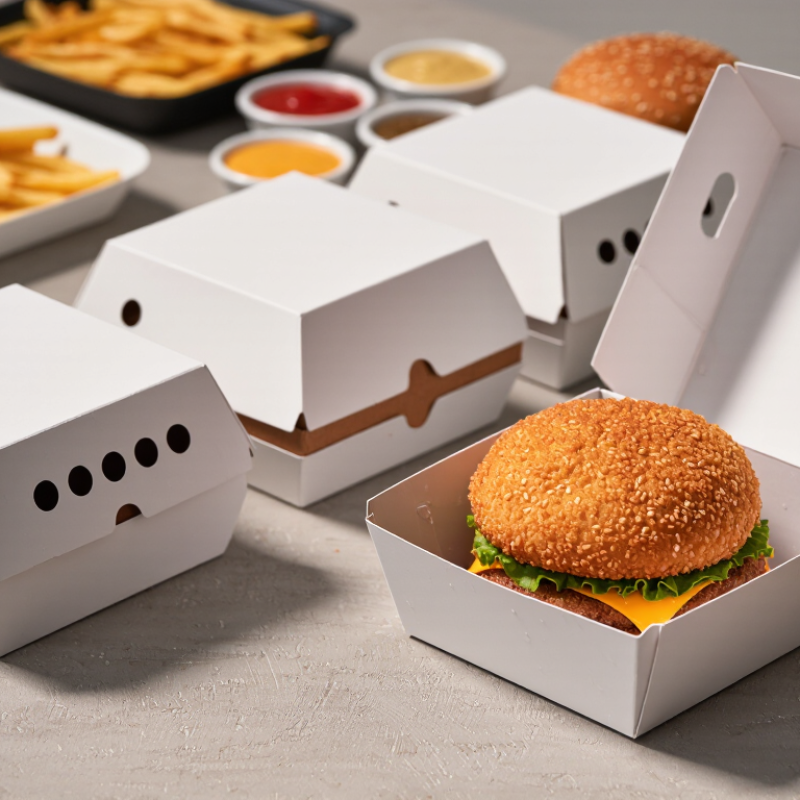
A top custom food burger boxes supplier does more than print a design. Experience shows in practical details, such as grease-resistant board, secure locking tabs, and suitable ventilation holes. The box should protect a warm burger without becoming soft during delivery. A reliable supplier will ask about burger size, sauce levels, stacking conditions, and delivery distance. They should also recommend materials based on actual use, not only appearance. Small details matter.
Professional knowledge appears through testing and clear specifications. Ask for samples made with the same board, ink, and structure used in mass production. Check compression strength, folding accuracy, surface rub resistance, and odor after printing. A pre-production sample can reveal loose tabs or poor ventilation. Not every sample survives testing. This is worth admitting, because honest suppliers correct weaknesses before production begins.
Authority and reliability come from traceable processes. A capable factory should explain material sources, food-contact documentation, inspection points, and batch records. Clear communication also matters when artwork changes or delivery schedules move. The supplier should flag problems early, including colors that may print differently on recycled board. I would question any factory promising perfection without testing. Consistent quality usually comes from careful inspection, realistic advice, and a willingness to improve one detail at a time.
Types of Custom Burger Boxes and Their Food-Service Uses
China Top Custom Food Burger Boxes Supplier
Custom burger boxes should match the burger, service speed, and eating environment.
Kraft paper boxes suit takeaway counters and casual delivery. They feel natural and handle moderate grease well.
White coated boxes offer sharper printing and easier surface cleaning. They work well for promotional meals and food-service displays.
Corrugated burger boxes provide stronger protection for stacked orders and longer journeys. Their extra structure helps preserve shape, though they use more material.
Clamshell boxes open quickly and support busy lunch periods. Folding tuck-top boxes close securely without extra tape. They suit delivery orders, meal sets, and compact storage.
Ventilated designs release steam through small openings. This helps reduce soggy buns and softened fries. However, large vents can cool food too quickly.
Window boxes display toppings clearly, but the film should be suitable for food contact. Size matters. A box that is too tight crushes the bun, while excess space allows movement.
Tips: Test each box with a freshly cooked burger for ten minutes. Check grease resistance, stacking strength, and opening speed. Choose water-based inks when practical. Avoid claiming complete compostability without verified testing. That detail is easy to overlook. Small mistakes can affect customer trust. A supplier should provide material specifications, sample testing, and consistent production records. Some designs look attractive but perform poorly during real delivery. Performance deserves more attention than decoration.
Materials, Printing, and Structural Design Options
China Top Custom Food Burger Boxes Supplier
Materials, Printing, and Structural Design Options
Choosing burger box materials affects freshness, strength, and customer experience. Food-contact paperboard is widely used because it is lightweight and easy to customize. Kraft board creates a natural appearance, while white folding board offers sharper color reproduction. Corrugated paper adds protection for delivery orders. Grease-resistant coatings can reduce oil stains, but they should meet applicable food-contact requirements.
Printing needs more than attractive artwork. Water-based inks are often suitable for food packaging when properly specified. CMYK printing supports detailed images, while spot colors create stronger visual contrast. We check ink adhesion, color consistency, and rubbing resistance before production. A screen proof may look excellent, yet the final box can appear different on textured kraft board. That difference deserves attention.
Structural design influences how a burger travels. Tuck-end boxes suit fast service and simple assembly. Locking designs can improve closure without extra adhesive. Vent holes help release steam, reducing sogginess, though excessive ventilation may cool the burger too quickly. Internal tabs can hold sandwiches in position during delivery. We usually test filled boxes, not empty samples. That is important. A package may fold perfectly but fail when loaded with a hot, sauce-heavy burger. Measurements, stacking trials, and transport simulations reveal these weaknesses before large-scale production.
How to Choose a Reliable Burger Box Supplier
China Top Custom Food Burger Boxes Supplier
How to Choose a Reliable Burger Box Supplier
Choosing a reliable burger box supplier requires more than comparing catalog prices. In China, a capable custom supplier should explain paper grades, printing limits, and production controls clearly. Ask for a physical sample before approving bulk production.
See it first. Check whether the box keeps its shape around a hot burger, absorbs grease, and closes without tearing. Test it hot. Measure the fit.
Request food-contact compliance documents for your target market. Confirm the material, coating, ink, and adhesive details. A trustworthy supplier should provide clear specifications, realistic lead times, and transparent minimum order quantities.
They should also describe quality inspections, including folding accuracy, print alignment, odor, and carton damage. Photos are not enough. Samples reveal more.
I once judged a box by its clean print and ignored its weak locking tab. That mistake caused sauce leaks during delivery.
Reliable suppliers should accept practical criticism and adjust the structure before production. Ask how they handle color variation, defective pieces, and shipping delays. Written answers matter.
A factory visit or live video inspection can add confidence, especially when production capacity is unclear. Do not choose only the lowest quote. A slightly stronger board may protect the meal, reduce complaints, and create better customer experience.
Even experienced buyers can miss small details, so keep testing the box under real delivery conditions.
Custom Ordering, Quality Control, and Delivery Standards
China Top Custom Food Burger Boxes Supplier
Custom burger boxes should begin with practical ordering, not attractive artwork alone. A reliable supplier confirms burger size, sauce level, stacking method, and expected daily volume. These details affect board strength, ventilation, and printing coverage. Food-grade paperboard must suit direct food contact and local packaging requirements. Clear specifications reduce costly revisions.
Quality control should continue from material selection to final loading. We check board thickness, folding accuracy, print color, glue position, and box compression. A simple sample test can reveal weak corners or poor ventilation. In production work, small errors still happen. One box may fold correctly, while another feels slightly loose. That problem needs investigation, not excuses. Inspection records, approved samples, and batch photographs improve reliability. Delivery standards should include production dates, carton counts, loading photos, and tracking updates. Realistic lead times matter more than impressive promises.
Tips: Send a physical box sample when possible. Confirm artwork dimensions before printing. Request a pre-production sample for unusual shapes. Keep spare days for customs checks or seasonal transport delays. A clear carton label helps warehouse staff count deliveries faster. Good communication prevents most avoidable packaging problems.
Custom Burger Box Planning: Size and Board Weight
Common food-packaging reference specifications used when selecting custom burger boxes. Larger formats generally require greater board weight for improved rigidity during handling and delivery.
Dimensions are shown as approximate internal length × width × height in millimetres. Board weights are expressed in grams per square metre (gsm), a standard paperboard measurement. Final specifications should be confirmed through product testing and food-contact compliance checks.
FAQS
They should ask about burger size, sauce levels, stacking, and delivery distance. Small details matter. Advice should reflect real use, not only appearance.
Food-contact paperboard is lightweight and easy to customize. Kraft board gives a natural look. White folding board supports sharper colors. Corrugated paper adds protection during delivery.
A suitable grease-resistant coating can reduce oil stains and softening. The coating should meet applicable food-contact requirements. Too much coating may affect appearance or recyclability.
Tuck-end boxes assemble quickly. Locking tabs can improve closure without extra adhesive. Internal tabs may hold the burger in place. Structure matters more when sauces are heavy.
Vent holes release steam and can reduce sogginess. Excessive ventilation may cool the burger too quickly. The right balance depends on food temperature and delivery time.
Request samples using the same board, ink, and structure planned for production. Test compression, folding accuracy, ink rubbing, odor, and filled-box performance. Empty samples can mislead.
Check ink adhesion, color consistency, and surface rub resistance. CMYK supports detailed images, while spot colors create stronger contrast. Kraft board may change the final color.
A capable supplier can explain material sources, inspection points, food-contact documents, and batch records. They should report artwork or schedule problems early. Perfect promises deserve caution.
Yes. Filled boxes should face stacking and transport trials. Watch for loose tabs, crushed corners, leaks, or trapped steam. Some weaknesses appear only after movement.
Honest recommendations are more useful than attractive samples alone. Not every sample passes. A supplier should correct weak details before large-scale production. Improvement is rarely instant.
Conclusion
Choosing a top Custom Food Burger Boxes supplier involves more than comparing prices. A reliable supplier should offer durable packaging, consistent quality, flexible customization, and dependable delivery for different food-service needs. Custom burger boxes may include clamshell boxes, tuck-top cartons, window boxes, and grease-resistant designs, each suitable for dine-in, takeaway, delivery, or promotional use. Materials such as kraft paper, white paperboard, and recyclable food-grade board can be combined with printing, coatings, ventilation features, and practical structural designs to protect burgers while presenting them attractively.
When selecting a supplier, buyers should evaluate material safety, printing accuracy, production capacity, sample approval procedures, and quality-control standards. Clear communication about dimensions, artwork, order quantities, lead times, and shipping requirements helps prevent delays and inconsistencies. A professional supplier should also support custom ordering, inspect products throughout production, and provide reliable packaging and delivery services. With the right partner, businesses can obtain functional, visually appealing, and consistent Custom Food Burger Boxes that support food quality and customer satisfaction.

Blog Tags: