
Packaging Insights & Industry Guides
Discover expert tips, structural design trends, eco-friendly practices, and packaging strategies to elevate your brand.
The 2026 conversation about Custom Bakery Donut Boxes is moving beyond attractive printing.
Today, successful bakeries need boxes that protect texture, support branding, and reduce unnecessary material.
A warm glazed donut can soften cardboard within minutes.
A poor fit can leave icing pressed against the lid.
Small details matter.
Packaging specialist Lisa McTigue Pierce has described packaging as “the silent salesperson.”
That idea remains practical for bakeries choosing their 2026 box designs.
A well-made donut box speaks through its color, opening style, structure, and printed message.
It can make a six-piece order feel carefully prepared.
It can also encourage customers to photograph and share the package.
The best Custom Bakery Donut Boxes should match the bakery’s real service conditions.
High-volume shops may need quick assembly and reliable stacking.
Boutique stores may value textured paper, foil accents, or a windowed lid.
Delivery-focused businesses should test grease resistance, ventilation, and internal movement.
Food-contact safety and responsible material sourcing also deserve close attention.
No single box wins every situation.
That is worth remembering.
A beautiful design may fail during humid summer deliveries.
A recyclable structure may need stronger engineering than expected.
Even experienced buyers can overlook condensation, carrying comfort, or storage space.
This guide compares the leading 2026 options through practical performance, visual impact, customer experience, and packaging reliability.
The goal is not merely to choose a prettier box.
It is to choose one that protects the donut and strengthens trust.
What Defines the Best Custom Bakery Donut Boxes in 2026?
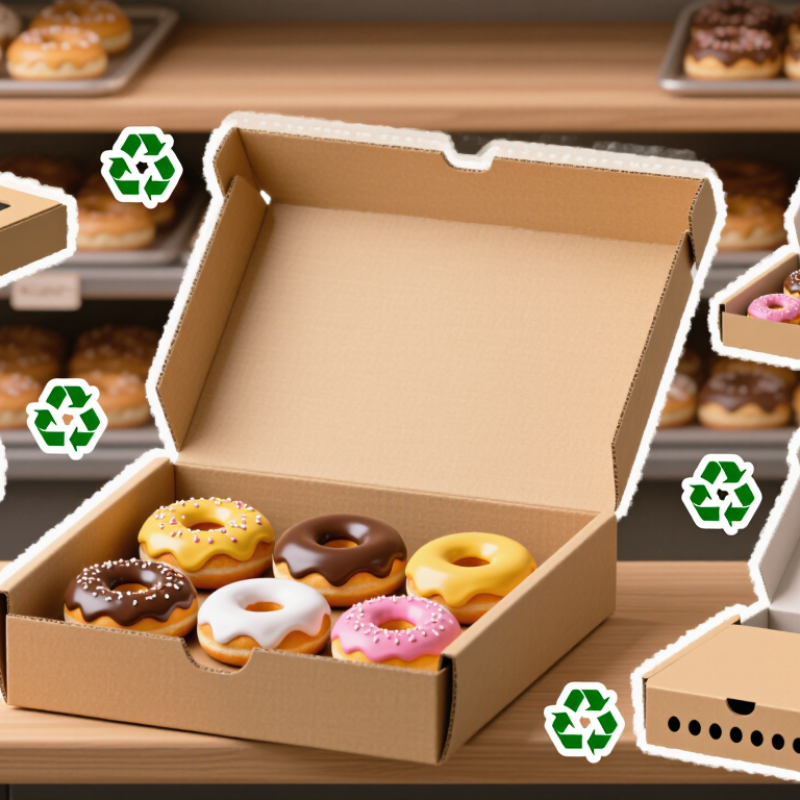
The best custom bakery donut boxes in 2026 protect the product before impressing the customer. A strong box keeps rings upright during delivery. It also prevents glaze from sticking to the lid. Test the interior with real donuts, not empty samples. A six-donut box should hold each piece securely, even when carried across a busy sidewalk. Small air vents can reduce condensation, especially with warm, filled donuts. However, too many vents may expose toppings to dust or drying. Balance matters.
Material quality defines the experience. Food-safe board, grease resistance, and firm folding edges are essential. Recyclable paper is valuable, but only when it survives handling. A weak sustainable box creates waste through crushed products. That deserves honest reconsideration. Custom printing should remain clear under bakery lighting. Simple colors, readable product details, and accurate sizing often perform better than crowded artwork. A reliable supplier should provide samples, material specifications, and transport testing results.
Tips: Measure the tallest donut first. Leave space for toppings. Check the lid after refrigeration. Avoid oversized boxes. Ask for a moisture test. Review the final design with staff before ordering large quantities.
What Are the 2026 Best Custom Bakery Donut Boxes? - What Defines the Best Custom Bakery Donut Boxes in 2026?
| Evaluation Dimension | Recommended 2026 Benchmark | Practical Specification | Why It Defines a Better Donut Box | Suggested Verification |
|---|---|---|---|---|
| Food-contact safety | Required | Use food-contact-compliant paperboard, inks, coatings, and adhesives. | Prevents unsuitable substances from transferring to donuts, glazes, fillings, or toppings. | Request a current food-contact declaration and applicable compliance documentation. |
| Material strength | High priority | Use rigid folding carton board or corrugated board appropriate for the box size and load. | Helps the package resist crushing during stacking, transport, and customer handling. | Check compression performance and conduct a filled-box stacking test. |
| Typical capacity | Flexible | Offer practical formats for 1, 2, 4, 6, 9, and 12 donuts, with internal clearance around the product. | Provides secure presentation without excessive empty space or unnecessary packaging material. | Test the actual donut diameter, height, toppings, and arrangement before approval. |
| Grease and moisture resistance | Required | Use a food-safe grease-resistant treatment or an appropriately coated board where needed. | Reduces oil stains, softening, leakage, and loss of print quality from greasy or chilled products. | Perform a timed grease, condensation, and refrigeration-to-room-temperature test. |
| Ventilation | Product dependent | Include controlled vents for warm or freshly fried donuts; use closed construction when moisture retention is preferred. | Balances condensation control with the need to preserve softness, icing, and toppings. | Compare the product after filling, closing, and holding it for the intended selling period. |
| Closure security | Required | Use a locking tab, tuck-end, sleeve, or secure window construction that stays closed during handling. | Protects the contents and improves carrying convenience without requiring additional tape. | Carry, tilt, stack, and reopen filled boxes repeatedly to check closure performance. |
| Sustainability profile | High priority | Prefer recyclable paper-based construction, minimal mixed materials, and right-sized packaging. | Reduces material use and makes disposal easier for customers and food-service operators. | Confirm local recyclability, fiber content, coating type, and whether plastic windows can be separated. |
| Customization quality | High priority | Use accurate dielines, consistent color reproduction, readable typography, and artwork-safe margins. | Creates a professional package while preserving required product and handling information. | Approve a physical proof and inspect print registration, folds, cut edges, and color consistency. |
| Visibility and presentation | Optional | Add a food-safe window or display opening only when product visibility supports the selling format. | Allows customers to view decoration and assortment while maintaining adequate protection. | Check window clarity, adhesion, scratch resistance, and contact distance from the food. |
| Dimensional accuracy | Required | Maintain consistent internal dimensions and a stable base after folding. | Prevents donut movement, topping damage, lid interference, and uneven presentation. | Measure samples across multiple production batches and test the largest expected product. |
| Production efficiency | Important | Choose flat-packed designs with simple assembly and minimal manual handling. | Reduces storage volume, packing time, labor requirements, and assembly errors. | Record assembly time per box and evaluate the design using the normal packing workflow. |
| Order flexibility | Business dependent | Select order quantities, setup requirements, and replenishment timing that match sales volume. | Limits obsolete printed inventory and supports seasonal or limited-edition packaging. | Compare minimum order quantity, lead time, proofing time, and repeat-order conditions. |
| Storage performance | Important | Use flat-packed cartons that remain clean, dry, and dimensionally stable in normal storage. | Protects packaging quality before use and makes back-of-house storage more efficient. | Store samples under expected temperature and humidity conditions, then inspect for warping. |
| Total packaging value | Best-value focus | Balance unit cost with protection, appearance, labor, storage, waste, and customer experience. | The lowest purchase price does not always produce the lowest total operating cost. | Evaluate the complete cost per packed donut, including assembly, damage, waste, and storage. |
Selection principle: The best custom bakery donut box in 2026 is not defined by appearance alone. It should combine food safety, reliable protection, grease resistance, efficient handling, practical sustainability, accurate customization, and a total cost appropriate to the bakery’s product and sales volume.
FAQS
It should keep donuts upright and prevent glaze from touching the lid. Test with real donuts. The box should survive a busy sidewalk delivery.
Each donut needs a stable space without excessive movement. The interior should leave room for tall toppings and filled centers. Oversized boxes can increase sliding and damage.
Small vents can reduce condensation around warm, filled donuts. Too many vents may dry toppings or expose them to dust. Balance matters.
Food-safe board, grease resistance, and firm folding edges are essential. Recyclable paper helps only when it survives oil, moisture, and handling. A crushed donut creates avoidable waste.
A clear window can show glossy icing before the box opens. Simple colors, readable details, and accurate sizing often look more trustworthy. Less artwork may communicate more.
Right-sized recyclable paperboard can reduce unnecessary material and product movement. Water-based inks may support a lower-impact design. Do not trust vague environmental claims.
Request material specifications, food-contact evidence, and migration test results. Ask whether recycled fibers suit direct food contact. Documentation matters.
Place warm donuts inside the box and inspect grease resistance. Refrigerate the box, stack several units, and check the lid afterward. Review the final design with bakery staff. Small tests prevent expensive mistakes.
Conclusion
The best Custom Bakery Donut Boxes in 2026 combine reliable protection, attractive presentation, and practical functionality. They are designed with sturdy, food-safe materials that help prevent crushing, grease leakage, moisture damage, and movement during transport. Features such as secure closures, ventilation options, inserts, and appropriately sized compartments can preserve donut quality while making the packaging easier to handle. Custom printing, colors, window placement, and finishing details also help bakeries create a memorable customer experience and communicate their identity clearly.
Sustainability is another important consideration, with recyclable, compostable, or responsibly sourced materials becoming increasingly valuable when they meet applicable food-contact and packaging requirements. When comparing suppliers, bakeries should evaluate material quality, structural options, printing accuracy, minimum order quantities, production timelines, and total costs rather than focusing only on the unit price. A dependable supplier should offer flexible customization, consistent quality, clear specifications, and packaging solutions that balance brand appeal, product protection, environmental responsibility, and budget needs.